Booking a urology appointment can leave you unsure about what to bring, whether you need to fast, and which tests will follow. You will learn how a Pune clinic moves from symptom assessment to examination, targeted investigations, treatment choices and follow-up, including when a problem needs same-day care.
Key takeaways
- State your symptoms, onset, severity, fever and urinary changes when booking.
- Seek urgent care for inability to urinate, severe pain, heavy bleeding or high fever.
- Bring previous reports, medication details and a urine sample only if the clinic requests one.
- Ask what each test will show, how to prepare and when results will be reviewed.
Before your appointment: booking, urgency and preparation
Book by phone or the clinic’s online system and state that you need urological services in Pune. Give your main symptom, when it began, its severity, urinary changes, fever, previous stones or infections, and any urgent warning signs. Ask whether you need a same-day appointment and whether to bring a urine sample.
Seek same-day emergency assessment for inability to pass urine, fever with flank pain, visible blood with clots, or pain that remains uncontrolled.
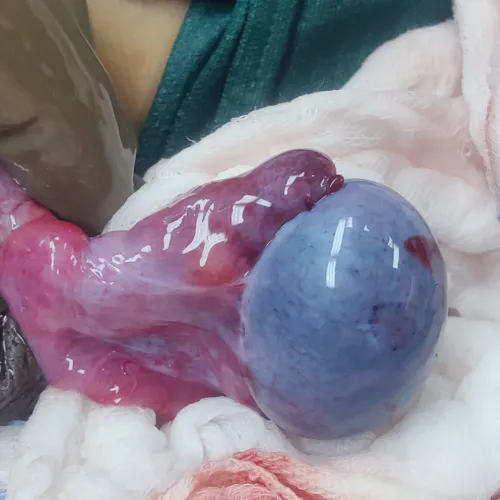
Sudden severe testicular pain with swelling, nausea, or a high-riding testis requires immediate assessment for torsion; do not wait for a routine urinary health consultation in Pune or for an ultrasound if the clinical picture is clear.
- Bring previous reports, medication names and doses, surgical records, and imaging discs.
- Write a symptom timeline covering onset, triggers, urinary frequency, fever, and pain location. Include changes in stream, urgency, blood, or nighttime urination.
- Arrive with a comfortably full bladder only when instructed for a particular ultrasound or uroflowmetry appointment; it is unnecessary for every consultation.
- Do not fast for a first visit unless the clinic gives specific instructions. Staff collect urine when assessing infection or another urinary condition.
What happens in the first consultation and examination
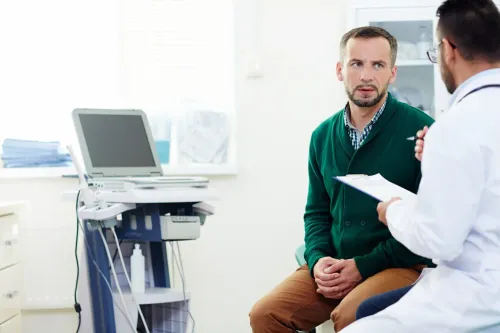
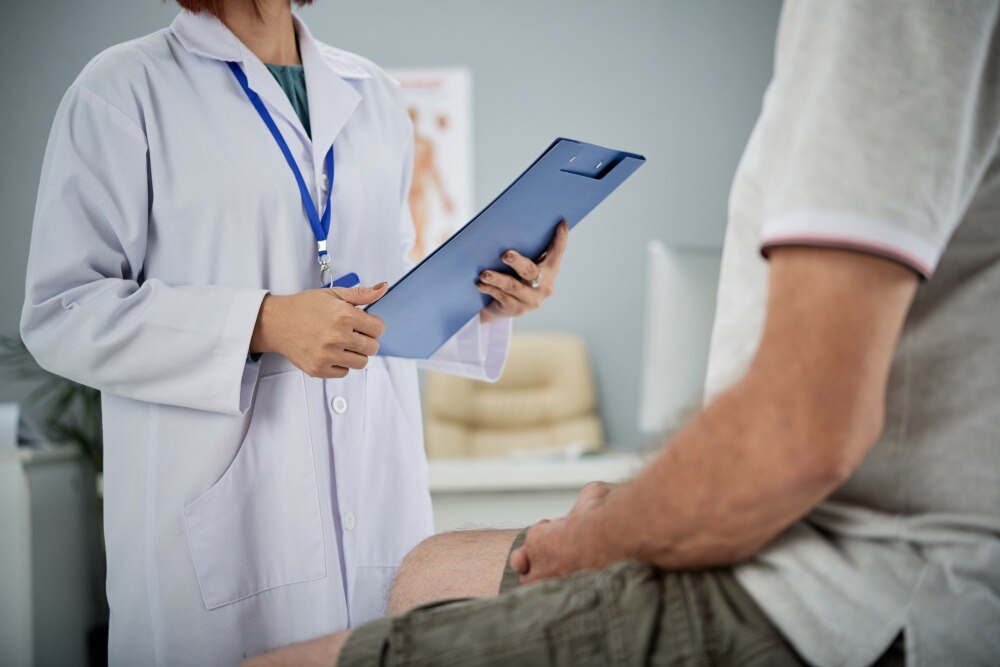
The first visit in what happens during urological services in Pune is a focused history, risk assessment and examination—not an automatic cystoscopy or operation. The clinician asks about pain duration and location, frequency, urgency, weak stream, difficulty starting, incomplete emptying, visible blood, fever, previous stones or infections, diabetes, kidney disease, medicines, smoking and family history.
- Lower urinary-tract symptoms are assessed with a symptom score, medication review and post-void residual urine measurement; infection, bladder dysfunction, stricture, stones and neurological disease are not assumed to be prostate enlargement.
- The examination covers only relevant areas: abdomen, flanks, genital area, scrotum, prostate, pelvis or neurological function.
- Sexual and fertility histories include erections, ejaculation, libido, contraception, testicular problems and duration of trying to conceive. For erectile dysfunction, urologist services in Pune should also assess blood pressure, diabetes, cholesterol, smoking, medicines and cardiovascular risk, with selected glucose, HbA1c, lipid or morning-testosterone tests.
| Concern | What the clinician clarifies | Possible next step |
|---|---|---|
| Urinary symptoms | Pattern, severity and residual urine | Urine testing or ultrasound |
| Blood, pain or fever | Infection, stone or another cause | Targeted imaging or cystoscopy |
| Fertility or erection problems | Sexual, partner, metabolic and medication factors | Selected hormones or semen analysis |
How the clinic chooses urine tests, scans and other investigations
1. Testing follows the clinical question, not a fixed package. During a urinary health consultation in Pune, urinalysis and urine microscopy can detect blood, protein, cells and infection indicators. Request urine culture before antibiotics when clinically safe for men with suspected infection, recurrent or severe symptoms, fever, flank pain or poor treatment response.
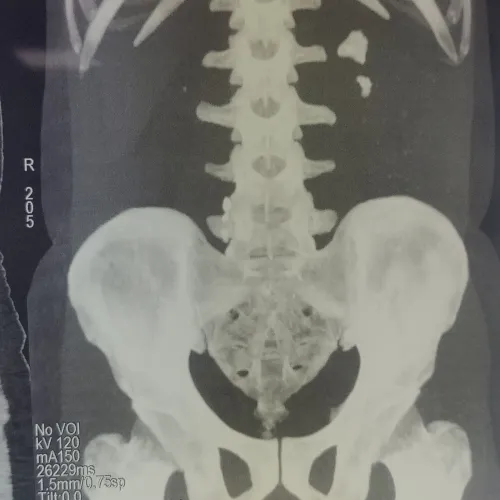
2. Creatinine and other blood tests assess kidney function and guide treatment. Ultrasound can examine the kidneys, bladder, residual urine and sometimes the prostate. Suspected renal colic may require non-contrast CT when accurate stone size and location matter; ultrasound is preferred initially during pregnancy.
MRI or other imaging is selected when the suspected condition requires it.
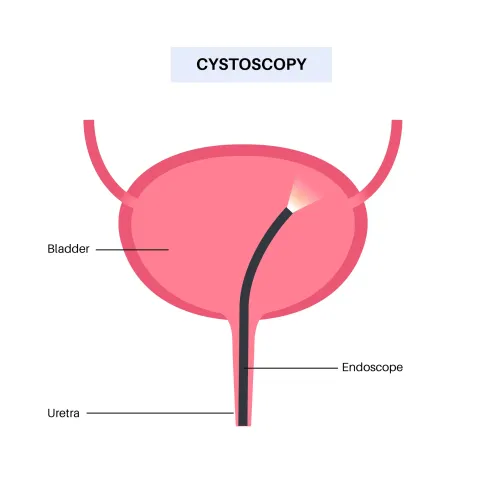
3. Cystoscopy is a camera examination of the bladder, not an ultrasound. Visible blood may therefore need cystoscopy and upper-tract imaging rather than an infection test alone. PSA testing requires counselling because benign enlargement, prostatitis, retention, ejaculation and recent instrumentation can change the result; discuss benefits, false positives, biopsy risks and overdiagnosis first.
4. Semen analysis is not a one-result verdict. If the first test is abnormal, repeat it at least once, about a month later, alongside assessment of both partners; selected patients need hormonal or genetic testing. This targeted approach is standard across urologist services in Pune and avoids unnecessary cost, radiation and invasive procedures.
What uroflowmetry and cystoscopy feel like in practice
A comfortably full bladder gives uroflowmetry a usable sample. Knowing what happens during urological services in Pune can make the test less awkward.
- Arrive with your bladder comfortably full if the clinic instructs you. Do not overdrink to the point of pain.
- Enter a private room and urinate normally into the electronic measuring device. Do not push or force the stream; the machine records flow rate, volume and time.
- If your bladder is underfilled, the result may not represent your usual urination. Staff may ask you to repeat it with a better volume.
- Afterward, an ultrasound scanner may measure post-void residual urine, showing how much remains in the bladder.
At a urology clinic in Pune, cystoscopy involves passing a thin camera through the urethra into the bladder. Many outpatient examinations use anaesthetic gel; sedation, regional anaesthesia or general anaesthesia is chosen when the procedure or your needs require it.
Expect pressure, urgency or brief stinging during the examination. Mild burning or a small amount of blood afterward can occur; drink fluids if advised. Contact the clinic urgently for fever, worsening pain, inability to urinate or persistent heavy bleeding.
How symptoms change the treatment pathway
A result becomes a treatment plan only after the urologist matches it with symptoms, examination findings, kidney function and your priorities. At urologist services in Pune, the pathway may include:
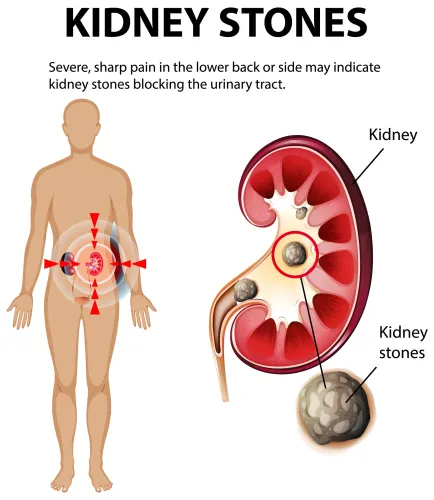
1. For a stone, size and location guide observation or selected medical expulsive treatment; obstruction, infection, worsening kidney function and uncontrolled pain push treatment towards shock-wave lithotripsy, ureteroscopy or percutaneous nephrolithotomy.
A painful obstructed kidney with fever is an emergency: obtain cultures, start antibiotics and drain urgently with a ureteric stent or nephrostomy before removing the stone.
2. Prostate-related urinary symptoms are treated according to bother and complications, not prostate size alone. Fluid timing, reduced caffeine and evening double-voiding may help; alpha-blockers or 5-alpha-reductase inhibitors are options. Surgery becomes relevant for retention, recurrent infection, bladder stones, kidney effects or symptoms that remain uncontrolled.
3. Erectile-dysfunction assessment includes sexual and medication history, blood pressure and genital examination. Selected tests include glucose or HbA1c, lipids and morning testosterone. Male-infertility assessment considers both partners, varicocele, hormones and selected genetic tests; testosterone therapy suppresses sperm production and is not a fertility treatment.
4. Sudden severe testicular pain needs immediate torsion assessment. If the clinical picture is obvious, do not wait for a scan. A urology clinic in Pune should treat this as time-critical.
What to expect before a procedure and during follow-up
Before you consent, the clinic should explain the diagnosis, alternatives, expected benefit, anaesthesia, bleeding and infection risks, fertility or sexual effects, and whether you may need a catheter or ureteric stent. Ask how tissue, stone or another specimen will be handled for pathology, plus recovery time, medicines, activity restrictions and warning signs.
A second opinion is sensible before an irreversible, fertility-affecting or uncertain intervention.
After you leave, follow-up may review:
- Symptoms, urine results and kidney function
- Residual urine, wound healing and whether treatment achieved its goal
- Removal of a catheter or ureteric stent
When comparing a urology clinic in Pune, check these practical differences:
| Factor | Ask before treatment | Why it matters |
|---|---|---|
| Investigation access | Are required scans and tests available? | Prevents avoidable delays |
| Emergency instructions | Whom do you call for fever, heavy bleeding or inability to urinate? | Provides a clear response |
| Continuity | Will the treating specialist review you? | Keeps decisions informed |
| Post-procedure contact | Is a direct contact method provided? | Helps resolve problems safely |
Urologist in Kothrud Pune - 08048400823 can be compared on these points by patients seeking local specialist evaluation within urological services in Pune.
Related services
Urology Treatment Urology is the field of medicine that is associated with the diseases and disorders of the male and female urinary tract. View service → |
Urology Uroflowmetry ₹1200 dr Rathi's Urocare clinic Kharadi |
Frequently asked questions
What should I tell the clinic when booking urological services in Pune?
Give your main symptom, when it began, its severity, urinary changes, fever, previous stones or infections, and any urgent warning signs. Ask whether you need a same-day appointment and whether to bring a urine sample.
What happens during a first urinary health consultation in Pune?
The urologist reviews your symptoms, medical and surgical history, medicines and previous test reports. The examination depends on your complaint and can include abdominal, genital, prostate or neurological assessment.
Which tests might a urology clinic in Pune order?
The clinician chooses tests based on your symptoms and examination. Options include urinalysis, urine culture, blood tests, ultrasound, uroflowmetry, post-void residual measurement, CT, MRI or cystoscopy.
What should I expect during uroflowmetry or cystoscopy?
Uroflowmetry measures urine flow while you urinate into a special device, followed by a bladder-residual check when needed. Cystoscopy uses a thin camera passed through the urethra after local anaesthetic; ask about discomfort, preparation, results and warning signs afterward.
Related service
Urology Cystoscopy ₹25000 for diagnosis as well as treatment |
Keywords